Improving decision clarity in high-risk identity and verification flows
In this case study, I show how I brought clarity and predictability to high-stakes identity and authentication flows in a large fintech ecosystem — where security is critical, systems are fragmented, and users have very different levels of technical confidence.
Some details have been changed to comply with my NDA
Overview
Yandex is a large-scale ecosystem of consumer and financial products, where identity is a core layer connecting multiple services. Identity flows span multiple services, devices, and verification methods.
While systems evolve independently, users experience them as one product — and expect consistency, clarity, and trust at every step.
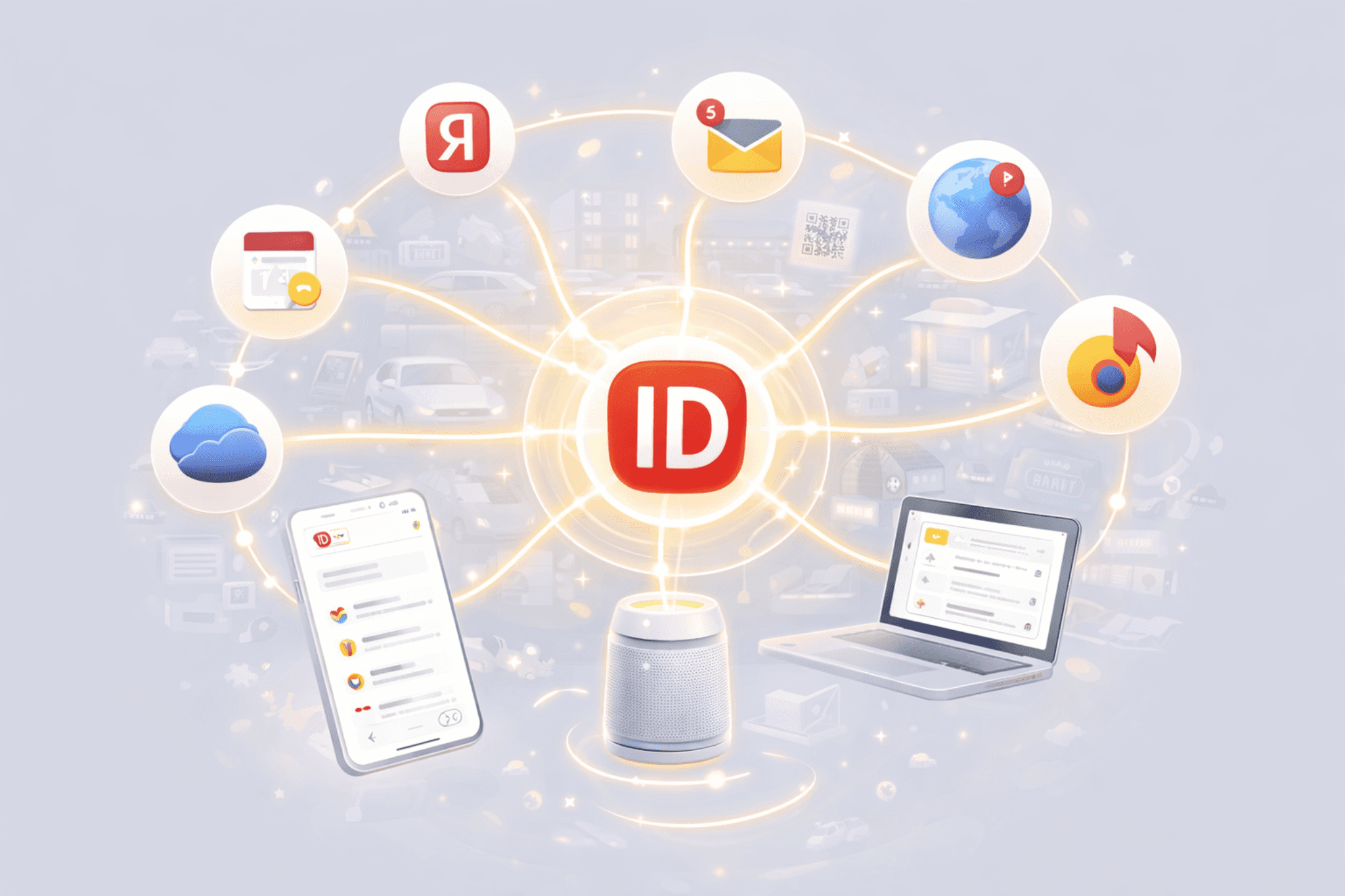
Yandex ID as the trust layer behind a multi-service ecosystem.
My Role
I owned content design across identity and authentication flows — including registration, login, onboarding, and verification — focusing on helping users make correct decisions in complex, multi-step scenarios.
Impact
— Increased successful verification by ~30%
— Reduced user errors in multi-step flows
— Lowered reliance on support channels
The Challenge
Identity flows span multiple services, devices, and verification methods. While systems evolve independently, users experience them as one product — and expect consistency, clarity, and trust at every step.
The audience is massive and highly diverse. Some users have a better understanding of technical issues than engineers, while others struggle to distinguish between an account and a phone number. The language had to work for both groups simultaneously.
On top of this, my task was to improve clarity without breaking fragile systems. There are still plenty of legacy interfaces dating back to the early 2000s, tightly coupled to back-end logic.
My Approach
I used a pragmatic, multi-layered workflow to ensure consistency and trust in identity flows.
Deep dives into system states, OS differences, partner rules and edge cases
Mixed-methods testing:
- AI-assisted cognitive load checks.
- Quick clarity tests with non-expert users.
- Unmoderated testing with over 100 users via PathwayClose collaboration with UX researchers to validate hypotheses and identify blind spots.
Focus on pattern-building rather than fixing individual screens in isolation.
The goal was not to explain everything, but to explain just enough at the right moment.
Selected Work
Below are representative problem areas I worked on across Yandex Fintech. This case focuses on my individual contributions.
Simplifying biometric login
Biometric login (Face ID / fingerprint) was available, but users didn’t clearly understand when or how it worked across multiple accounts and devices. This led to repeated logins and low adoption.
What I did:
Audited biometric and fast-login screens across platforms.
Rebuilt message hierarchy: benefit → action → reassurance.
Replaced technical labels with natural, user-centered language.
Created OS-specific microcopy and validated it in quick tests.
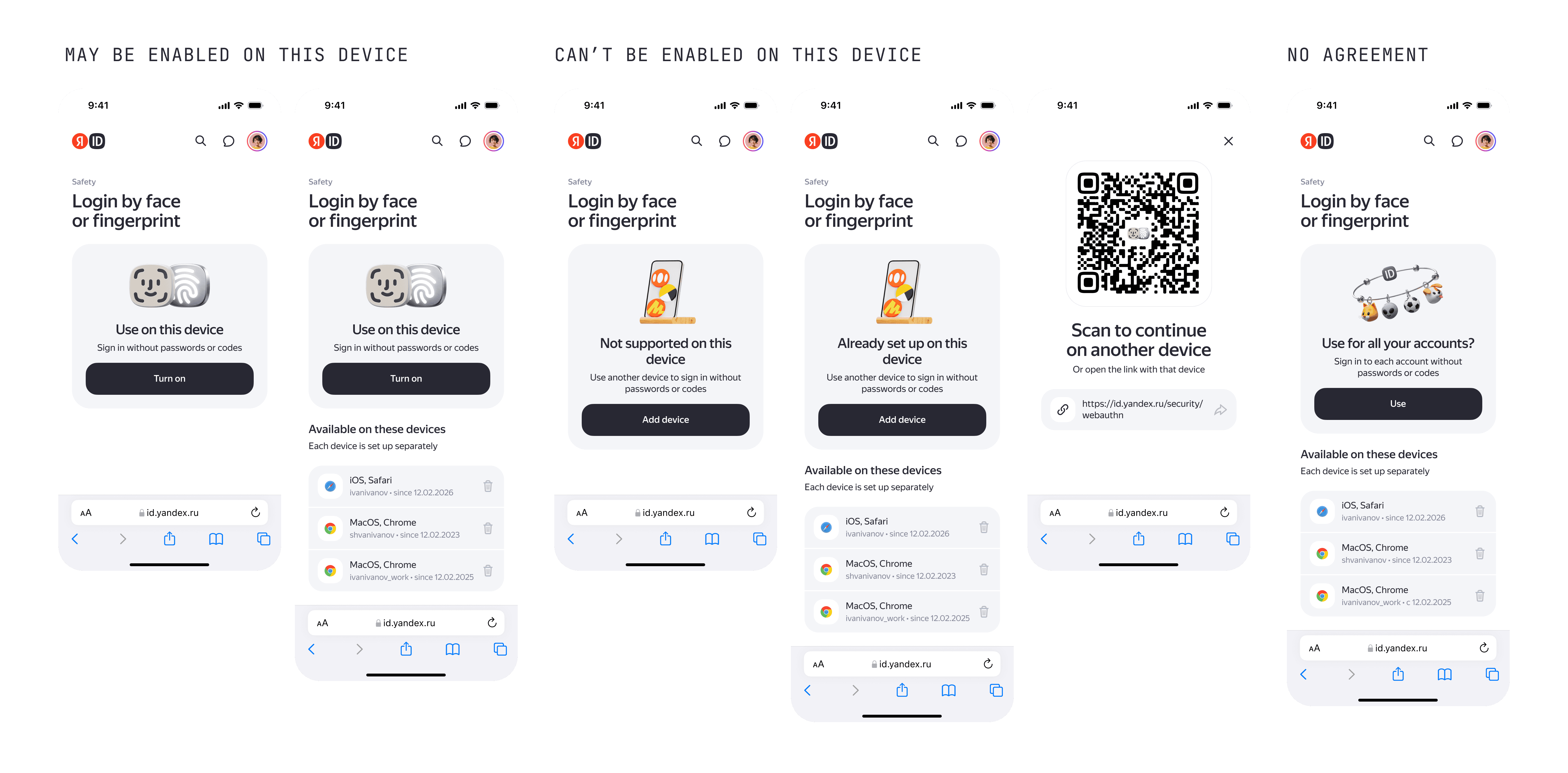
I simplified multiple edge cases into three clear user-facing models.
Impact
✅ +22% increase in users enabling biometric login.
✅ Created a more consistent tone across ID and Pay flows.
Clarifying identity verification
Identity verification via mobile operators and state services Gosuslugi was often perceived as opaque. The verification process could start from many different flows, and the user benefit was often unclear. Users didn’t understand why personal data was needed or which method would be used.
What I did:
Audited all verification entry points and states.
Reframed system steps into human explanations: purpose, visibility, next steps.
Simplified tone from formal and technical to calm and supportive.
Created a unified message system that adapts to the verification source.
Impact
✅ Reduced hesitation and drop-offs in verification step.
✅ Improved comprehension and trust.
✅ The verification flow now feels like a natural part of the Yandex experience.
Clarifying Family Relationships
In Yandex ID, family groups allow users to share benefits across services and devices. Without understanding the type of relationship in the family group, we couldn’t personalise the experience or tailor benefits for households. But in Russian, there are no universal, neutral words like “siblings” or “spouse.” Many terms sound bureaucratic or exclude modern non-formal families.
What I did
Researched real-world language patterns and sensitive edge cases
Tested multiple tones to find the most neutral and inclusive options
Introduced more natural relationship labels grounded in real-life language
Designed lightweight microflows to reduce pressure
Explained why we ask — without implying surveillance
Aligned tone across banners and in-profile prompts
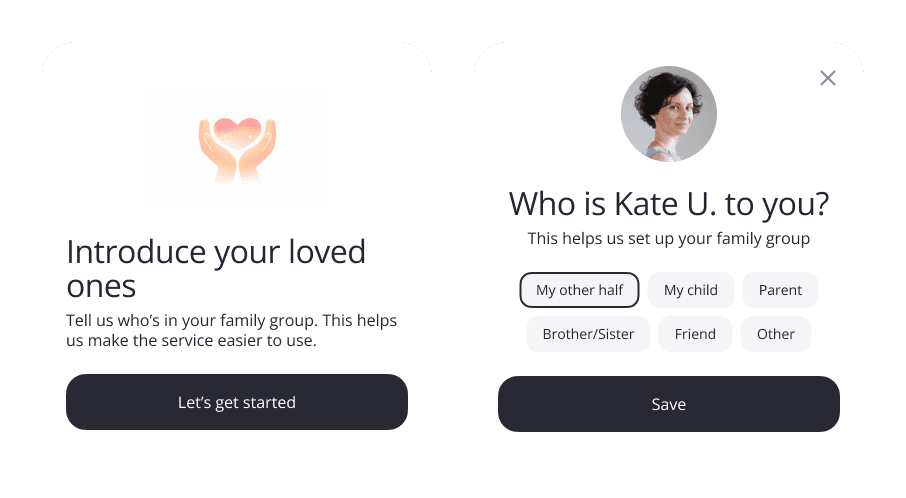
“My other half” performed better than more formal labels like “spouse” or “partner.”
Impact
✅ Conversion to account sharing did not drop after adding the step.
✅ 80% of users selected a relationship type, and fewer than 10% chose “Other.”
✅ Generated clear, high-quality data for future family-based features.
Reflection
This work reinforced a simple idea: language defines the emotional context of every interaction. In identity and security flows, my role wasn’t just to explain systems — but to act as a calm, trustworthy human presence on the other side of the screen.
Let’s talk if you’re building a fintech or other high-risk product
where trust can’t fail.
ustyakin@gmail.com